
I, Personally, Love Boosters
Boots Riley's "I Love Boosters" suggests that the aesthetics of socialist organization need not be dismal.

From the discordant, exuberant strains of the film’s main theme, I knew Boots Riley’s latest joint, I Love Boosters, would be a feast for the senses. The plot was a bit clunky, though some argue that its didactic nature is a feature, not a bug, but the film’s heavy-handed socialism was preaching to the choir in my case anyway—I didn’t need to be convinced of its message, so I was free to enjoy its immense aesthetic beauty.
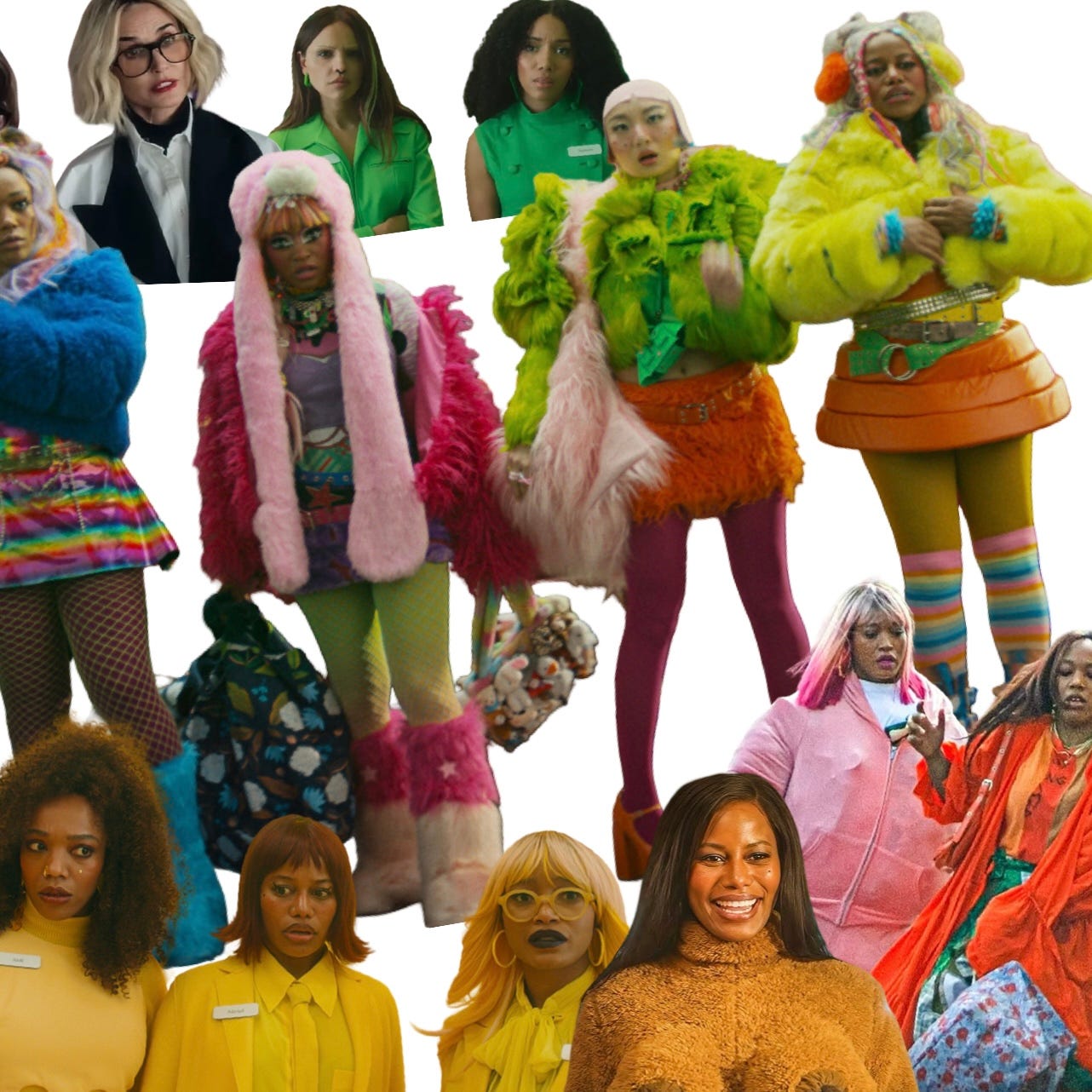
Though I hesitate to make this comparison because he’s much less obnoxious than Wes Anderson, Riley takes a similar tack in creating beautiful, poignant images and tableaux and letting them buoy the viewer along rather than relying on an airtight plot. Riley, thankfully, doesn’t deal in the same eerie whiteness that characterizes Anderson’s movies—Boosters is gleefully and pointedly Black, and its brilliant costume designer Shirley Kurata let the various influences of Black-originated style, from that refracted through the lens of gyaru culture to understated but culture-defining ‘70s fits sported by the likes of the Black Panthers.
Japanese-American Kurata, who also famously costumed Everything Everywhere All At Once, treated the characters’ wardrobes with cartoon logic, allowing them multiple outfits per minute and creating looks that seem unlikely given current-day physics (though that is easily explained by a very central plot… device). One of Kurata’s coolest moves was hiring recent fashion grads to make a few key looks, which I note a few of below. This reflects protagonist Corvette’s novice aspirations toward the fashion industry, also visible in outfits fashioned out of the likes of tube socks or ties, which as Kurata mentions, add an element of “resourcefulness” to the film that emphasizes how boosting, or shoplifting and reselling, isn’t due to a lack of resourcefulness—quite the contrary.
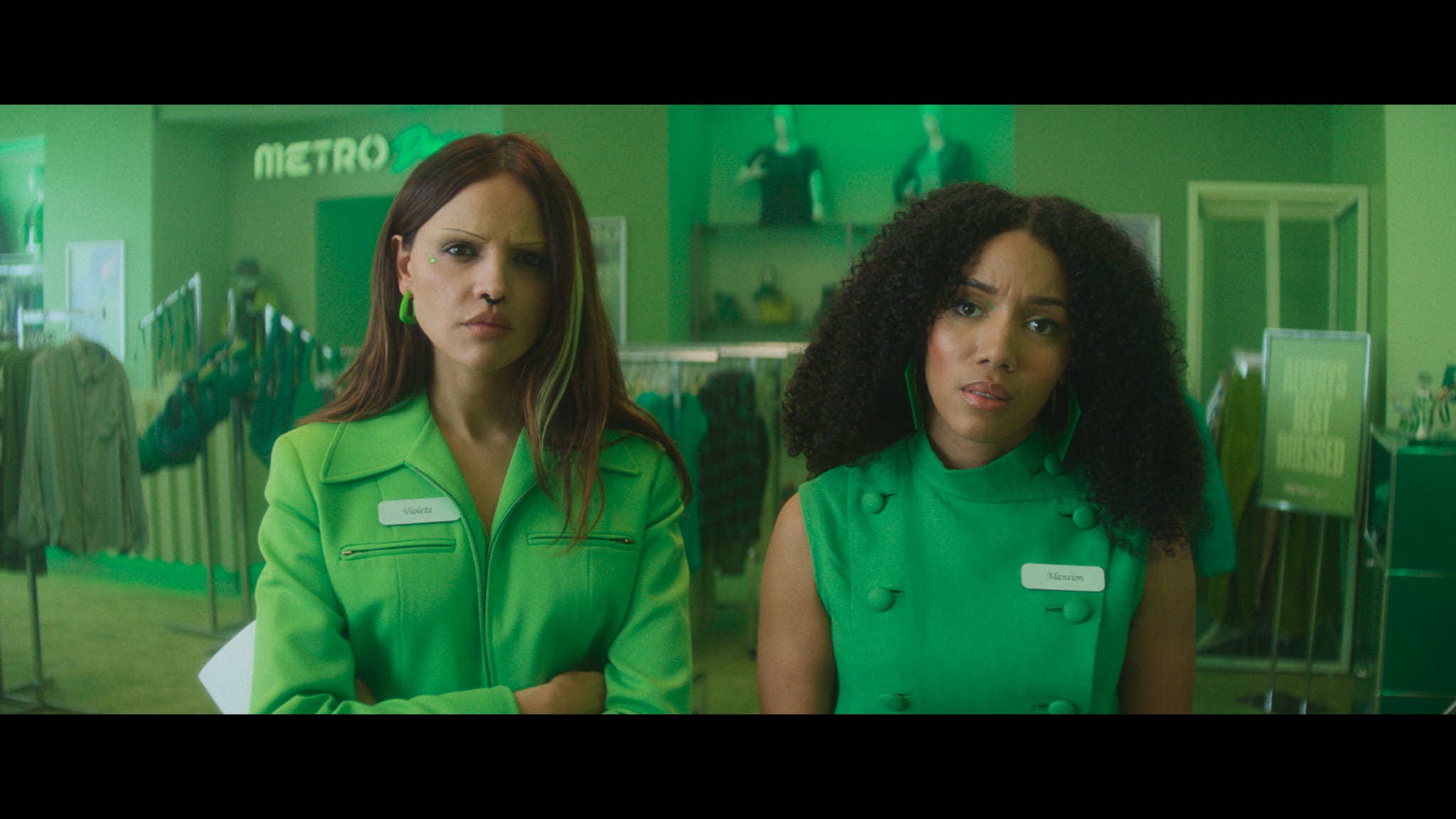
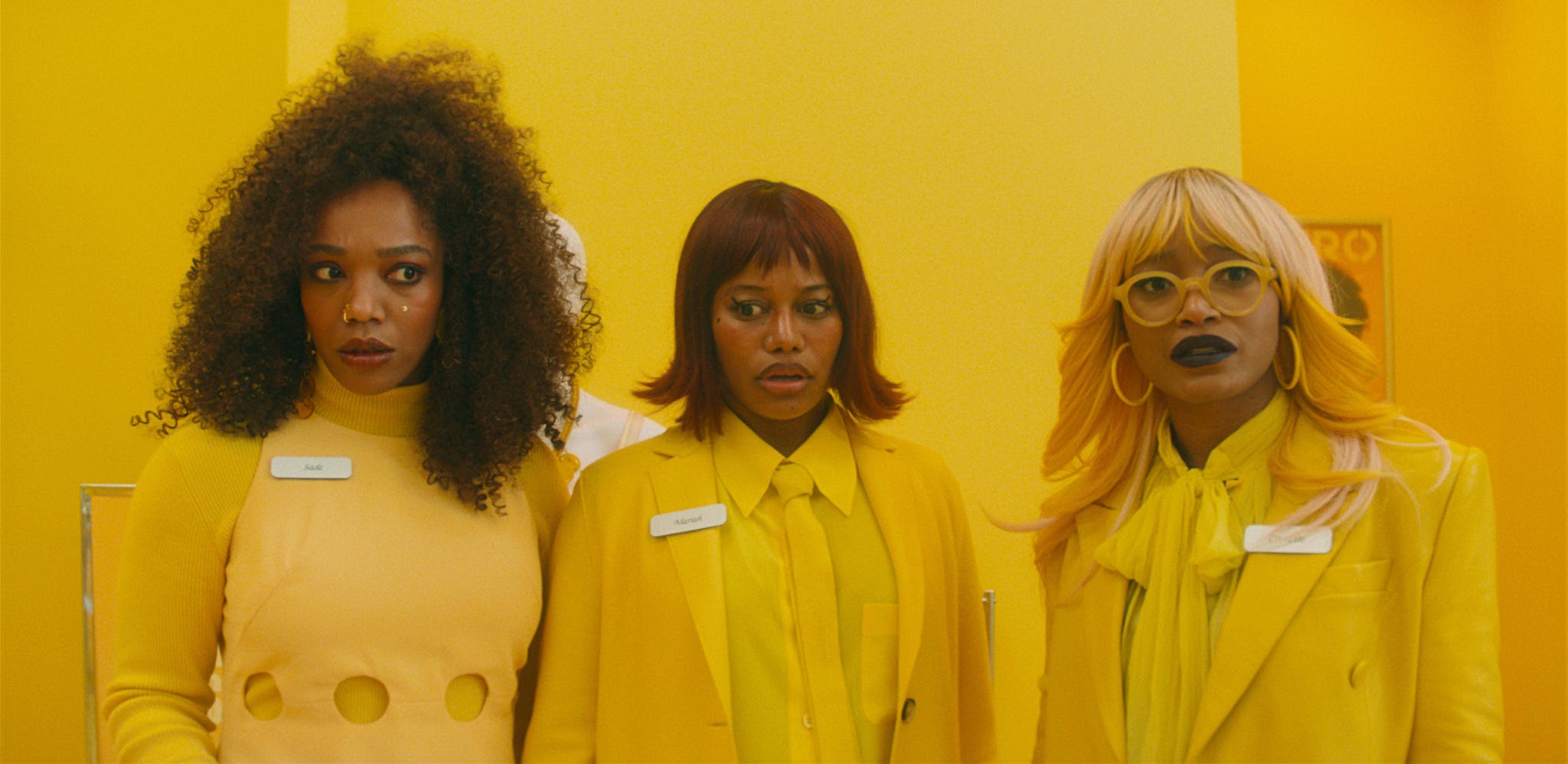
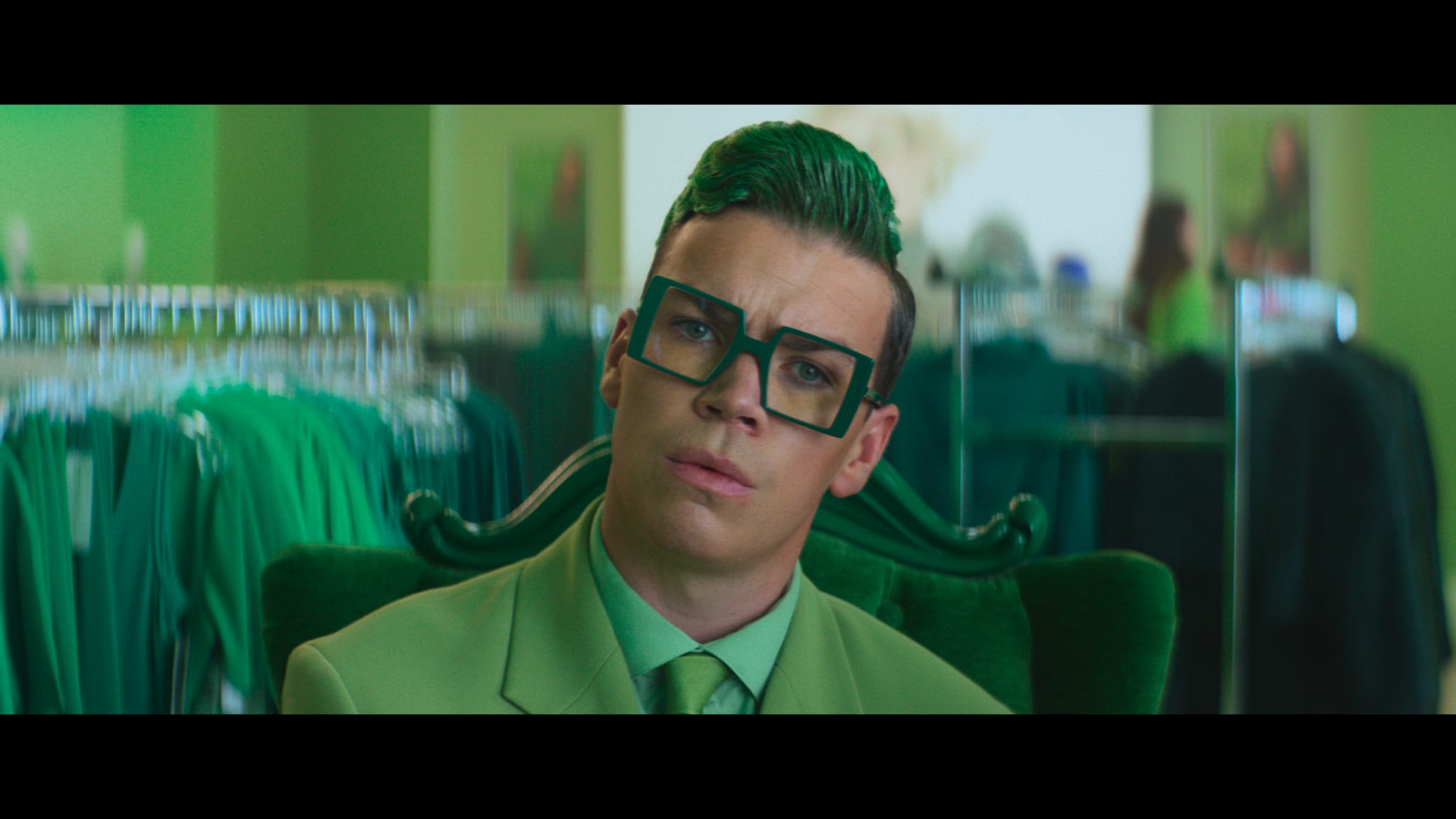
I am soon going to pen a piece on the mainstreaming of militant aesthetics, which is definitely one facet of a potential code of socialist fashion, but Riley and Kurata show that maximalism, absurdity, and indulgence can coexist with radical politics. Socialism and communism need not look austere or indistinct, in fact, it’s Christie Smith’s capitalist playing board of human chess pieces that brings uniformity and convention to the film, no matter how bright its technicolors, as seen in these high-qual stills courtesy of Neon (Neon reps, haha, please don’t scroll down any further than your photos :’D):
If you like these posts, please let me know by liking and commenting here or on Esque’s Instagram, subbing to the Esque Substack (this) for free, getting bonus posts for five bucks a month, or for ZERO DOLLARS, share (tag me if on IG so I can see and thank you)! If you share with three friends (or enemies), you’ll automatically get a free month’s subscription to Esque’s paywalled posts. If you buy anything from an Esque link, there’s a chance I’ll earn a percentage commission at no cost to you—if you end up inspired by anything below, please send over a photo of your new togs by replying to this email and I’ll comp you a month of Esque!
If you cannot afford the $5/month, I totally understand—respond to any of my email sends and I will set you up with a $1.50 subscription or comp you, whatever you need. Esque is for everyone!
Thank you SO MUCH for your support, whatever you are able and willing to do to help is extremely valuable to me and I’m honored to be a small part of your life on the web.
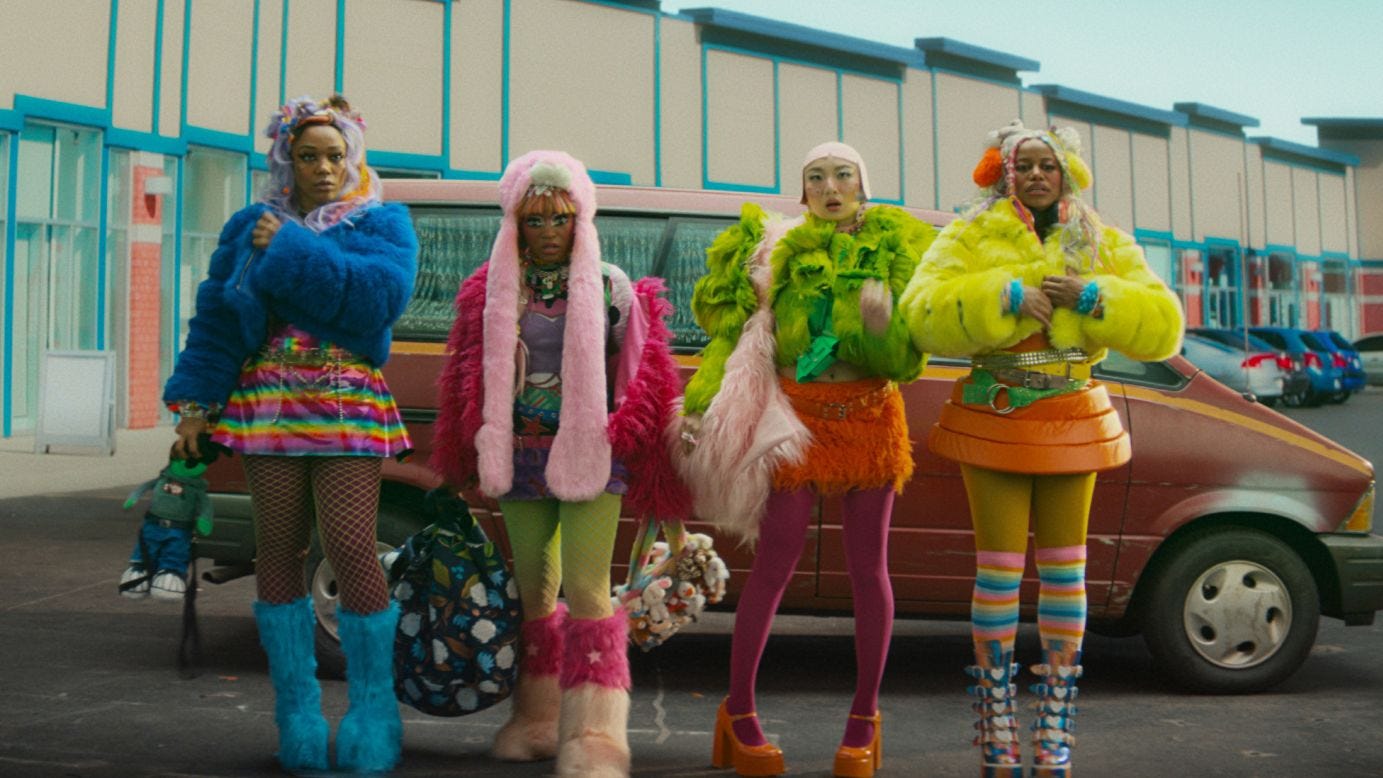
One of the few press images Neon would actually let me get my hands on is the film’s most prolific: the fashionable foursome are on a retaliatory shoplifting spree, disguising themselves in increasingly hypermaximalist fits, including these obviously Harajuku-inflected looks. As gyaru culture borrowed, sometimes in an overtly racist fashion, Black aesthetics (and skin tones!), so here the ladies borrow it back, with outfit highlights including Mariah’s sculptural layered skirt, Corvette and Sade’s furry boots (Snooki also knew their value back in the day), and Corvette’s anime-style eye makeup under a furry hat that extends into a scarf fitted with handwarmers.
Though the reclamation of these aesthetics by the Black leads is the most inspiring part of the image, Jianhu’s outfit is my favorite of the bunch for a single reason:
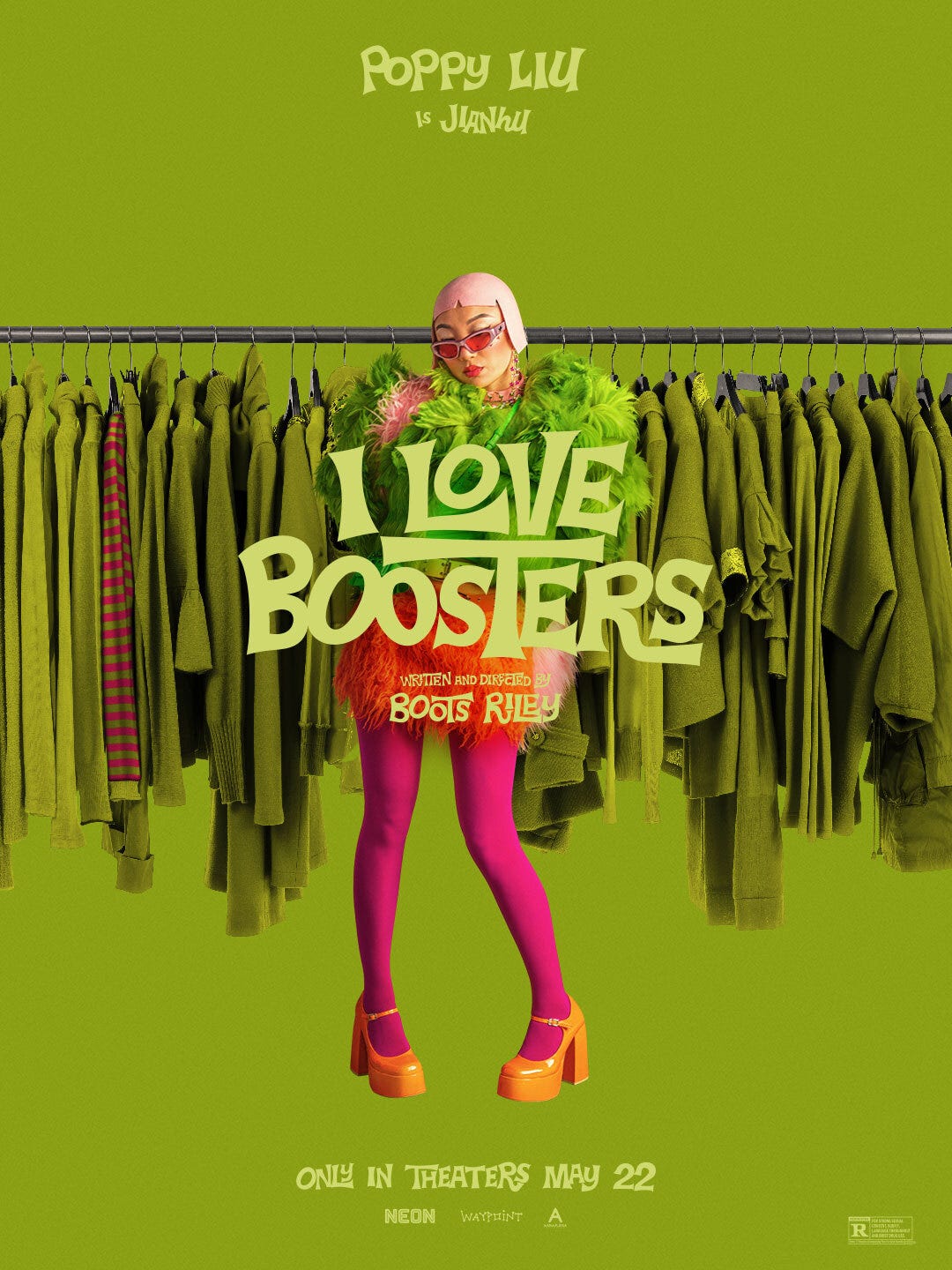
Her rubber headpiece hops, skips, and jumps over the lightly dabbled-in swim cap trend of 2024 (yeah, uh, “swimcapcore” didn’t happen) and suggests a doll-like wig, reminiscent of the removable Polly Pocket accessories we chewed on in days of yore. Here, it’s paired with sunglasses that look like they could be Gentle Monster and a spiky pink collar, the streamlined, squeaky head and legs of the outfit balanced out by the lettuce-green feathers (or is it fur?) bursting from her midriff.
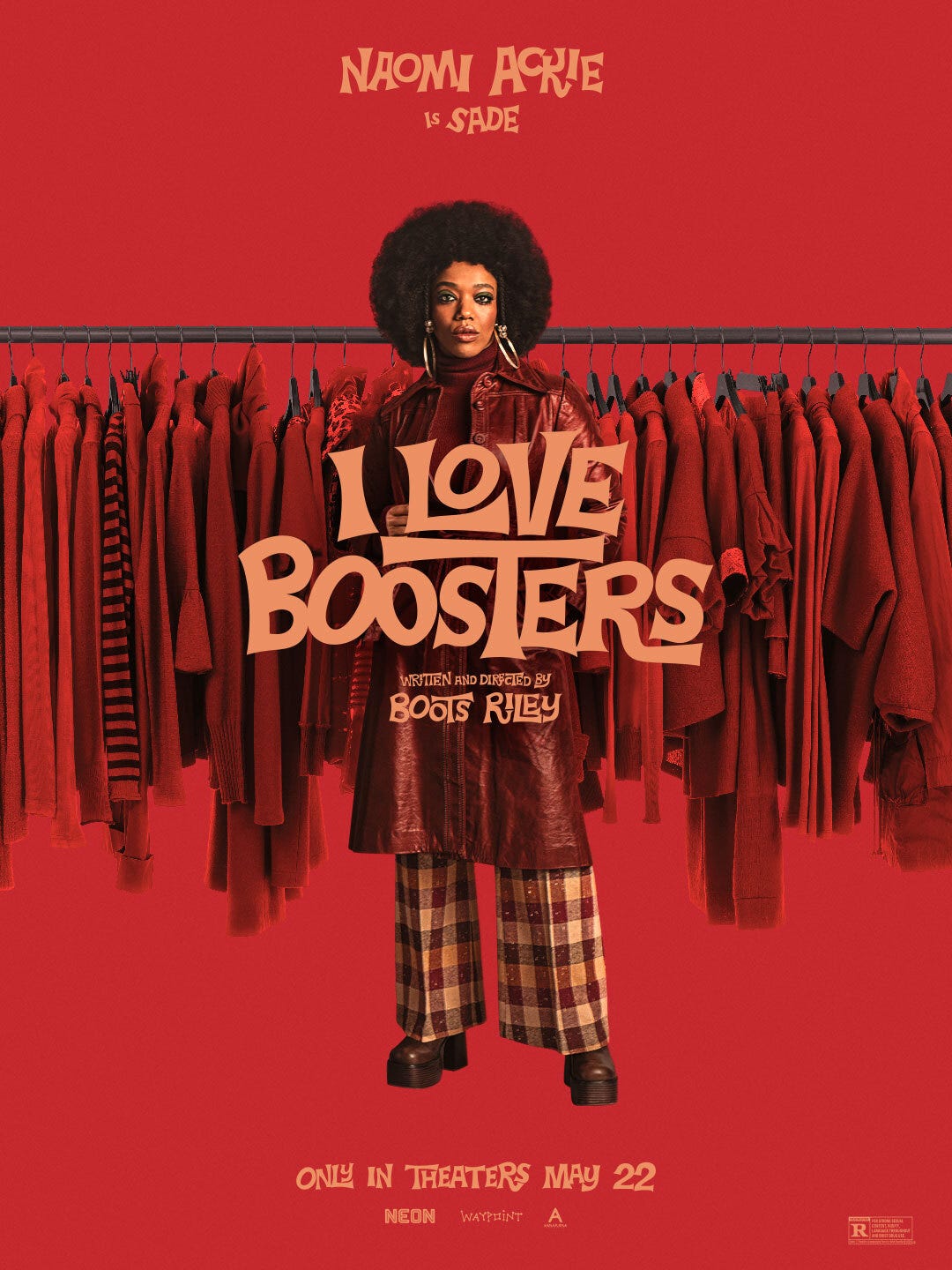
This ‘70s look rocked by Sade is on the opposite end of the flamboyant spectrum, with subdued shades of oxblood in a leather trench, turtleneck, and plaid trousers. This is THE fall outfit recipe for pretty much anyone, though Sade’s flawless afro and twin braids that end in beads seamlessly integrating into thick gold hoops are a definitive reminder that like 90% of so-called “universal” style is lifted directly from the Black fashion plates of every decade. Why shouldn’t they lift them back?
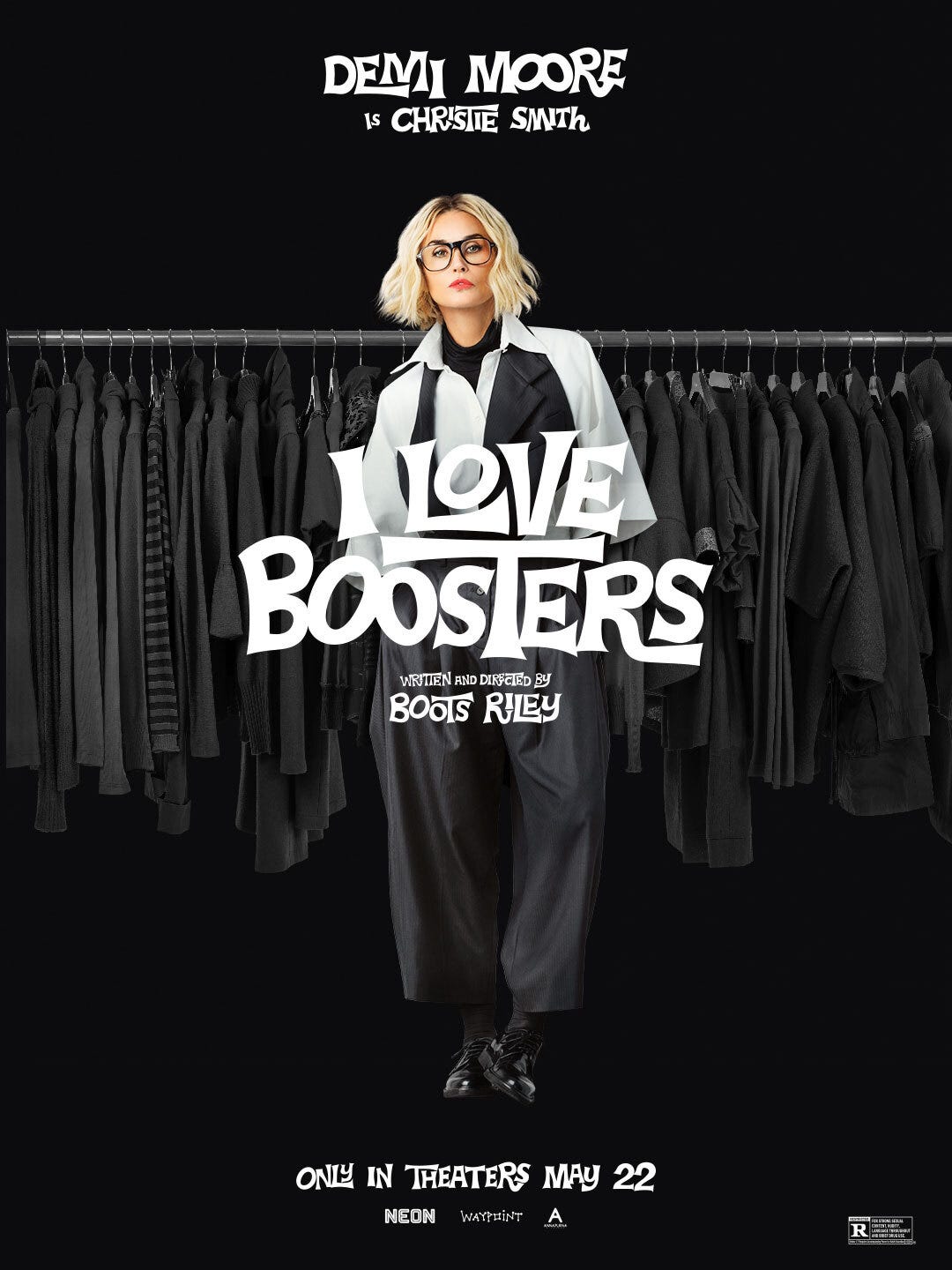
Christie (who I maintain should have been played by Julia Louis-Dreyfus) is the master of volume, making almost-too-short trousers look wicked cool with deeply gathered front pleats and rocking a black turtleneck (an appropriate reference to the likes of Steve Jobs and Lizzie Holmes) under a bloomy bloused topped with a… tie with a collar on it? Or a collar that looks like an open tie? draped louchely around her neck.
Ok, here’s where we get into the images I acquired through, ahem, less than ideal means. I feel like that’s in the spirit of the film, at least, though I do apologize for the low res.
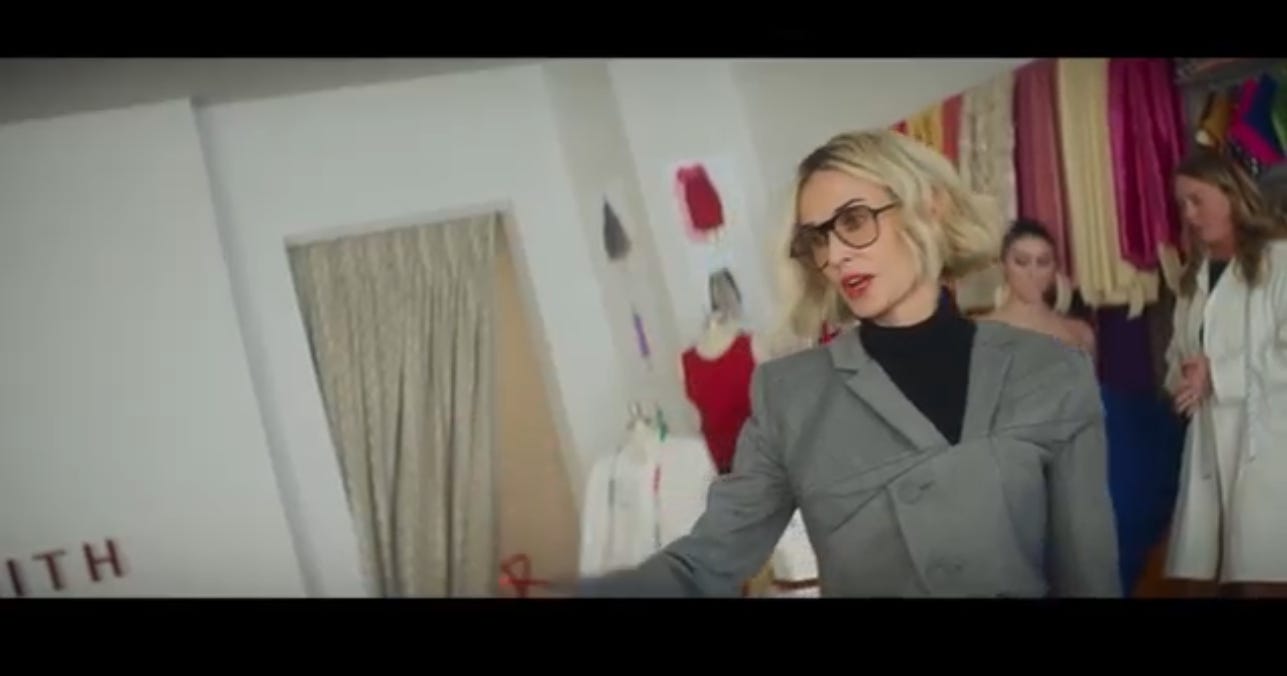
This origami-like, Comme des Garçons-ian blazer is a dash of frenzy atop another dour black turtleneck—almost like the contrast of Christie’s CEO-core, thick-rimmed glasses and her weightless, sometimes-unruly bob.
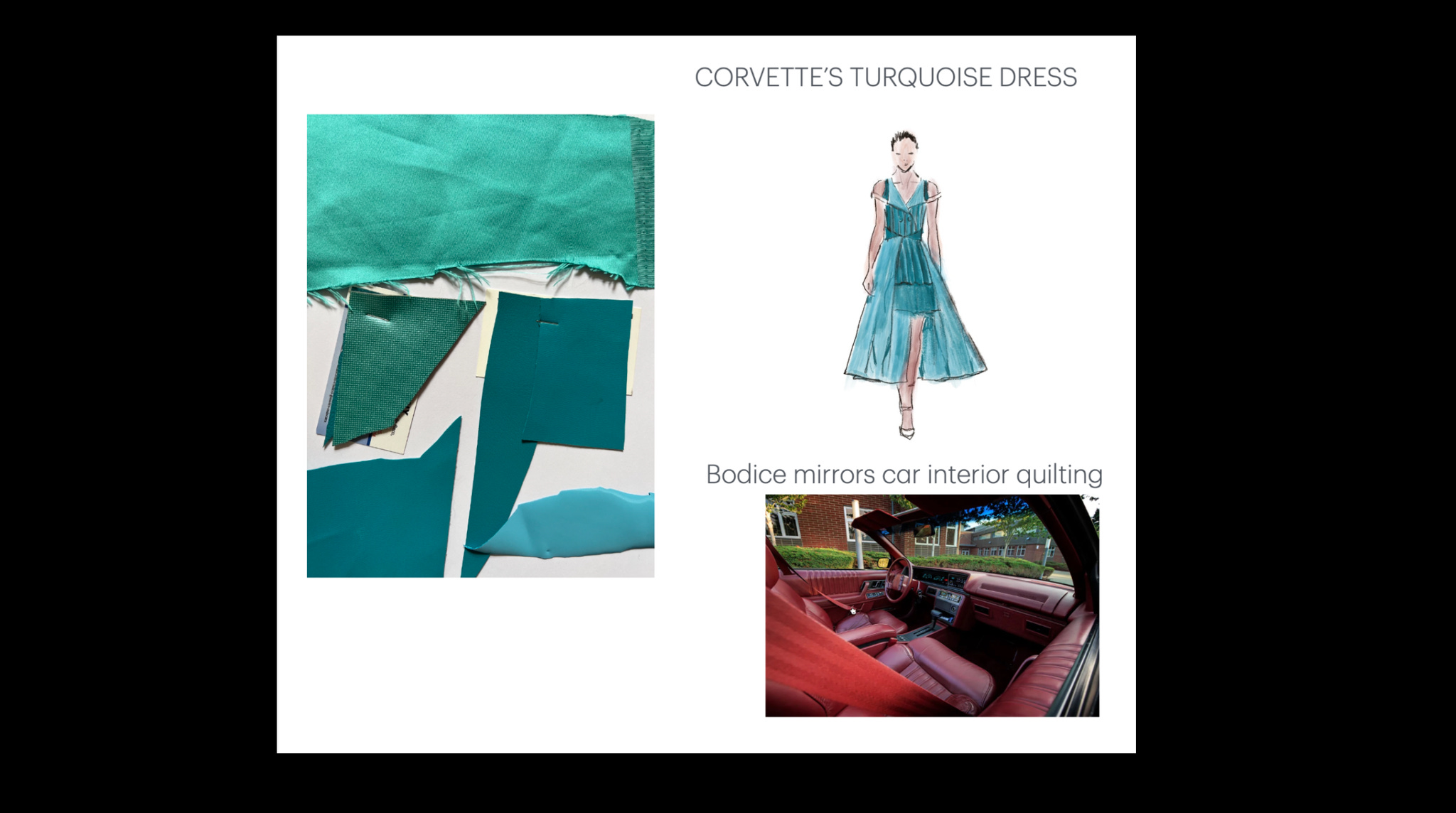
Onto some cool details of Shirley Kurata’s costuming: I loved that Corvette’s signature turquoise dress, in addition to looking a bit appropriately novice, mimicked the interior of the car that contained some of her most poignant early memories—I wish we’d gotten a bit more in the way of those flashbacks.
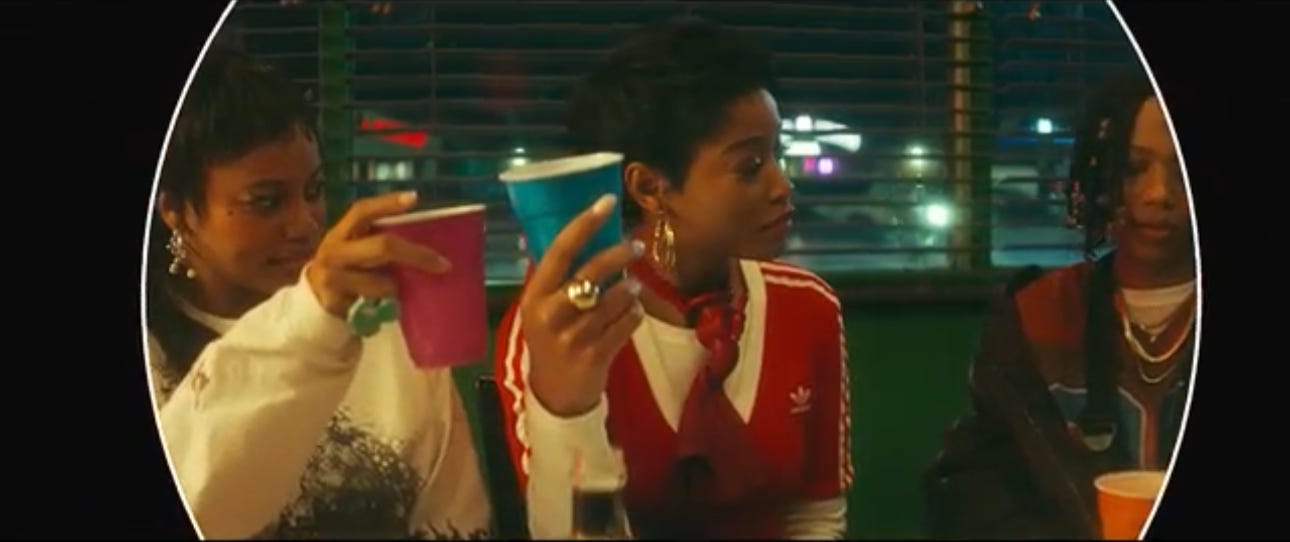
Corvette’s chilled-out Adidas V-neck layered over a thermal is made decidedly unchill with the addition of a tie that looks like… a fire hydrant? A hose spout?
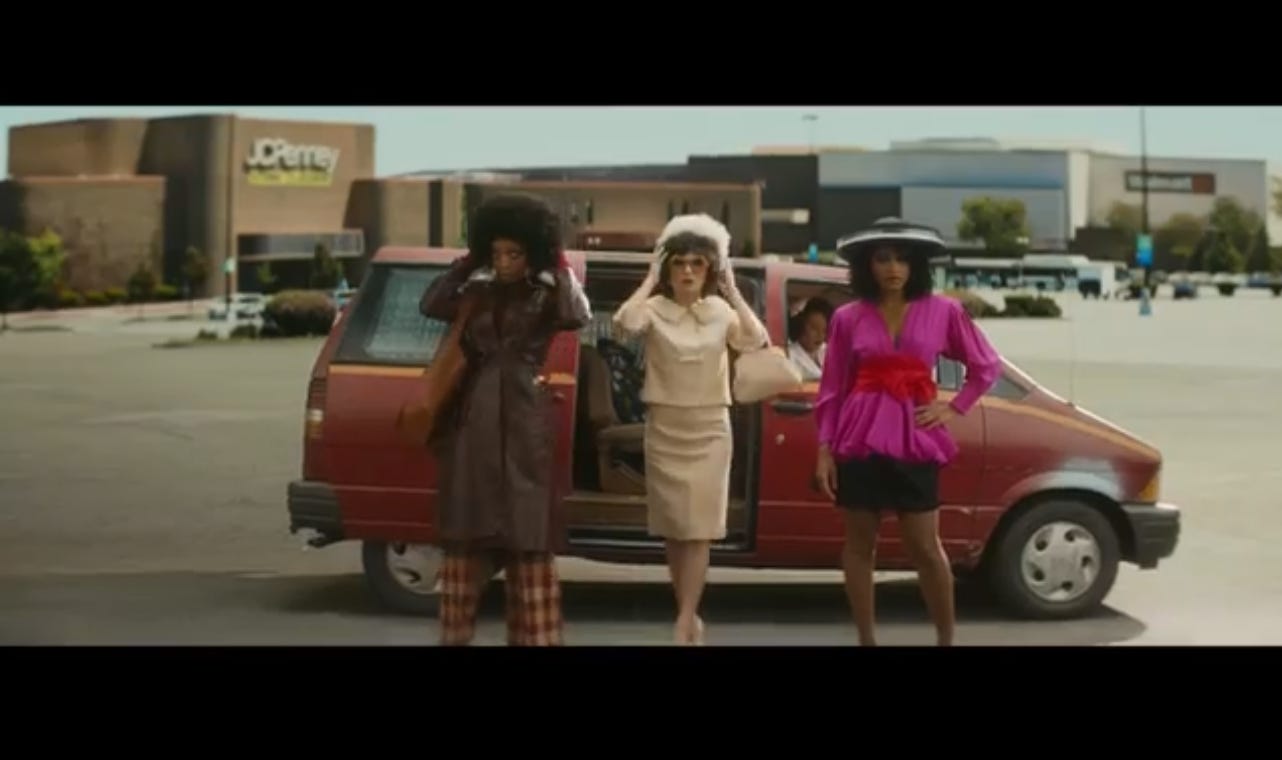
Alongside Sade’s ‘70s look from above, Jianhu and Corvette represent extremes of ‘60s style, with the former decked out in a fuzzier interpretation of a classic Jackie O suit and the latter sporting a bubble-hemmed shirt (something I think will supersede the bubble-hem skirt in coming seasons) and a UFO-like saucer of a hat.
Okay, now the quality’s about to get REAL bad for some of these. See the movie, folks!
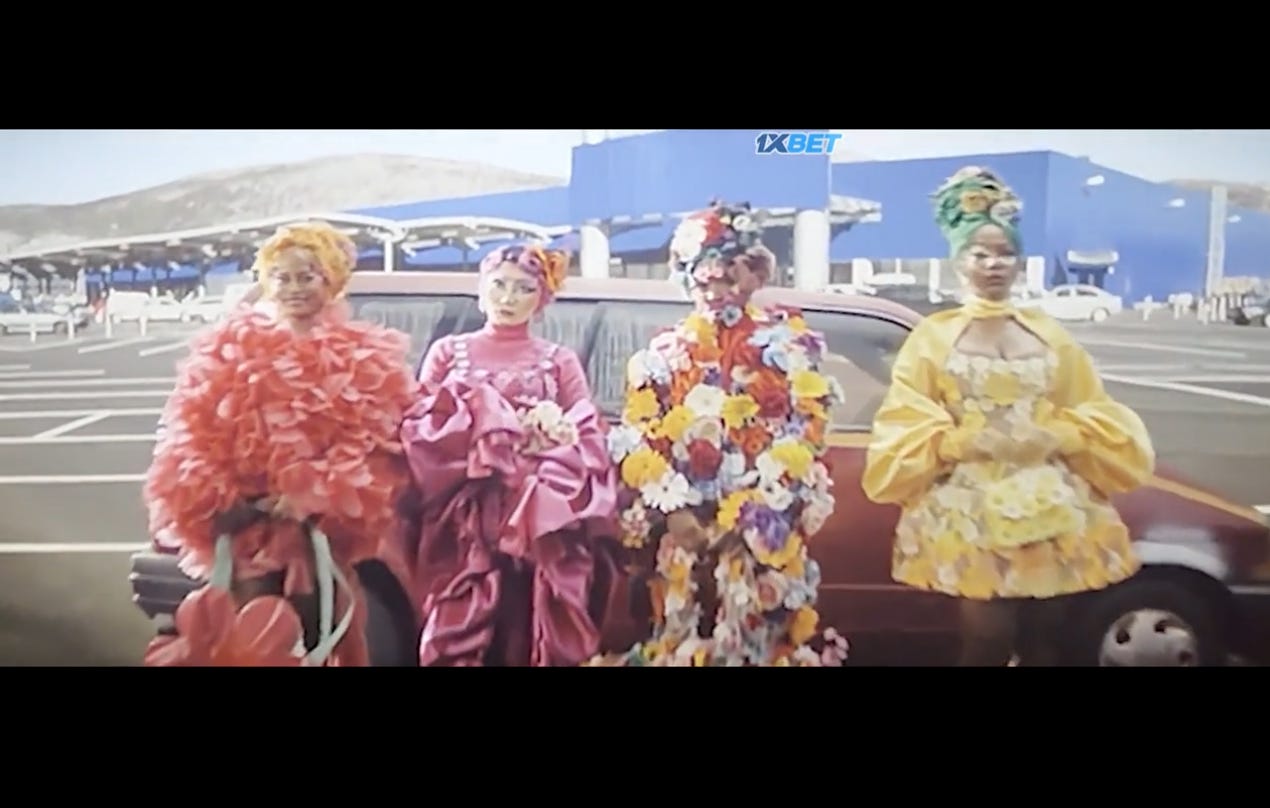
I loved these clusterfucks of tulle and blooms, at once recalling Midsommar and Kurata’s other most known project, Everything Everywhere All At Once. Sometimes an outfit should just be a Clump Of Stuff, and people like Kurata and Rei Kawakubo of CDG respect that. Maybe Japanese (Kurata is Japanese American, born in LA) designers are even more attracted to the chaotic clump because it’s so contrarian to normative Japanese design codes of minimalism, calm, and “cleanliness.”
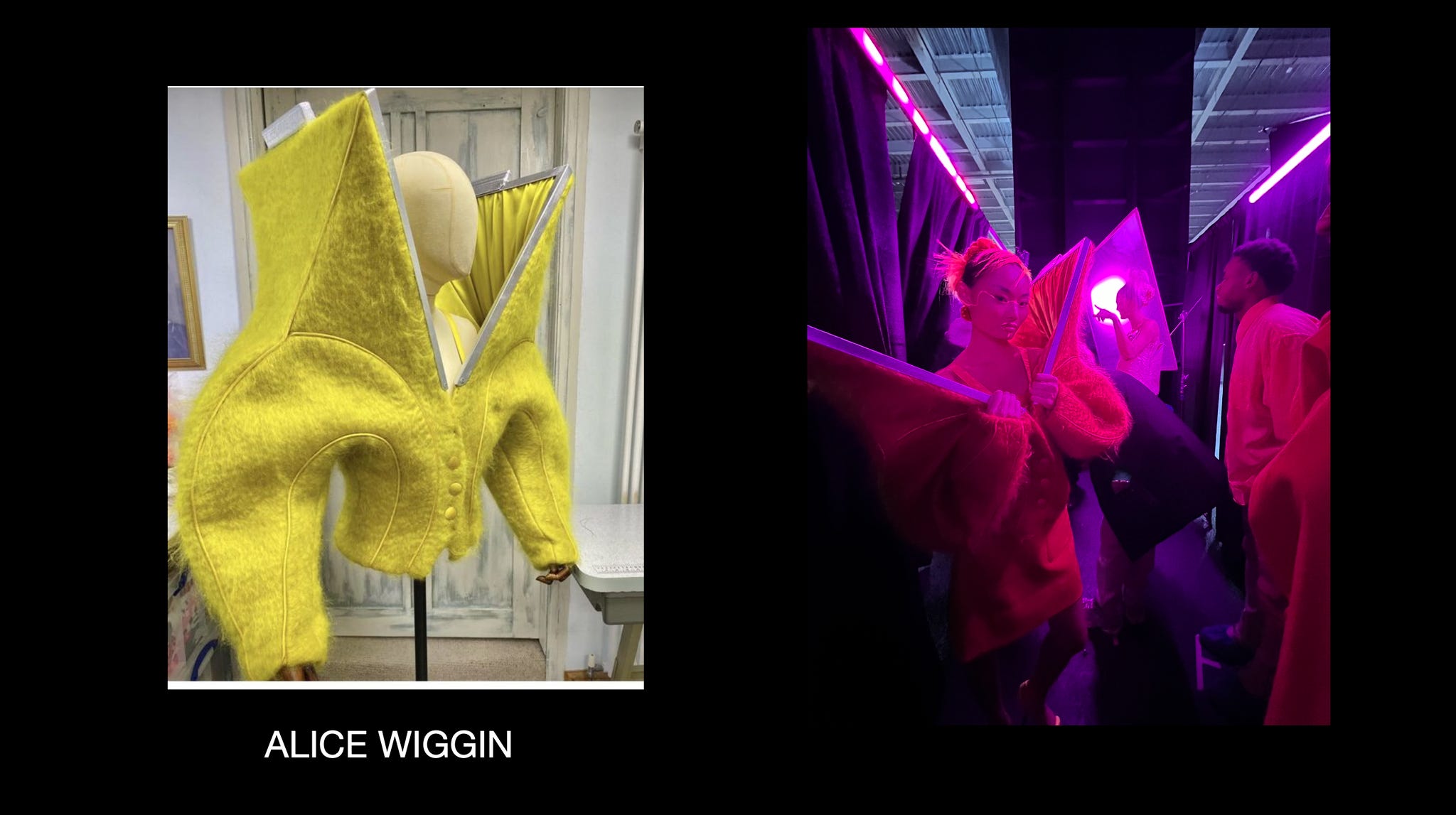
Kurata did something super cool and tapped a few Central Saint Martins fashion grads for custom pieces—Alice Wiggin’s sweeping curves and visual puns (is the gigantic “neckline” like the clasp of a coin purse?) show a ton of promise.
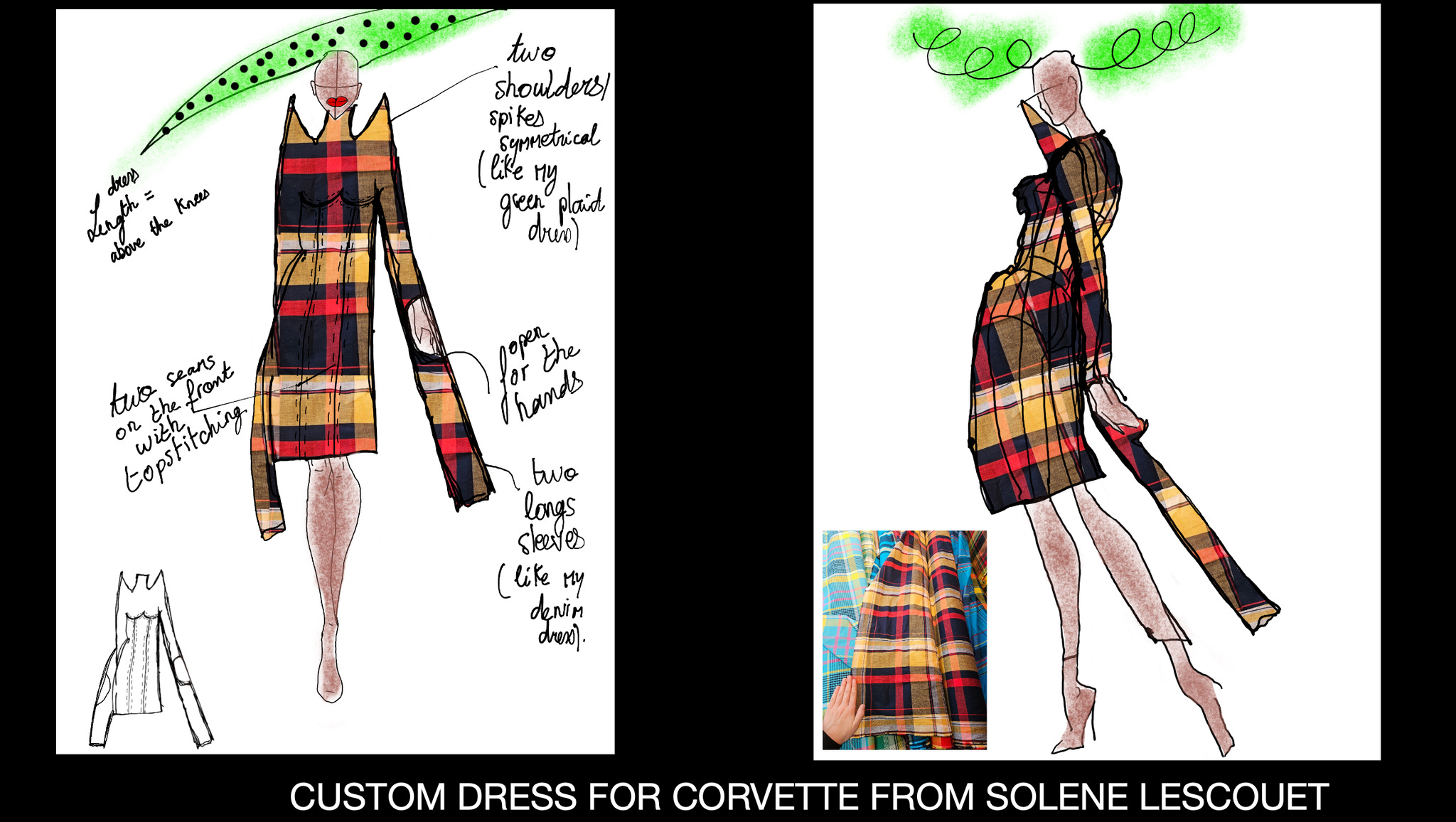
Solène Lescouët, a young French designer, also contributed looks to the film—I believe both this preppy villainess dress with draggly sleeves (something I think we will see in more mainstream fashion, in addition to shoulders that veer from bold to brutal) and the “deconstruction” of it below.
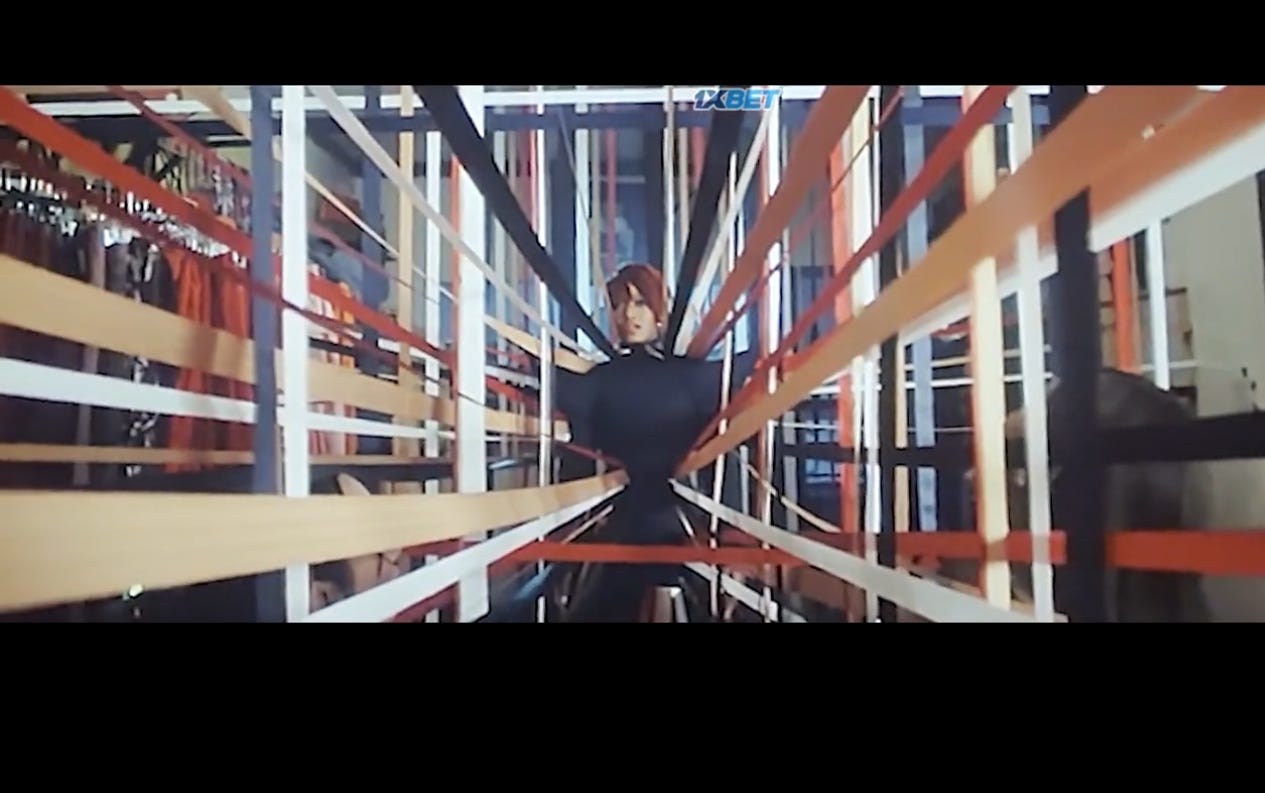
Dress-as-environment is a truly radical concept, fit for a radical film.
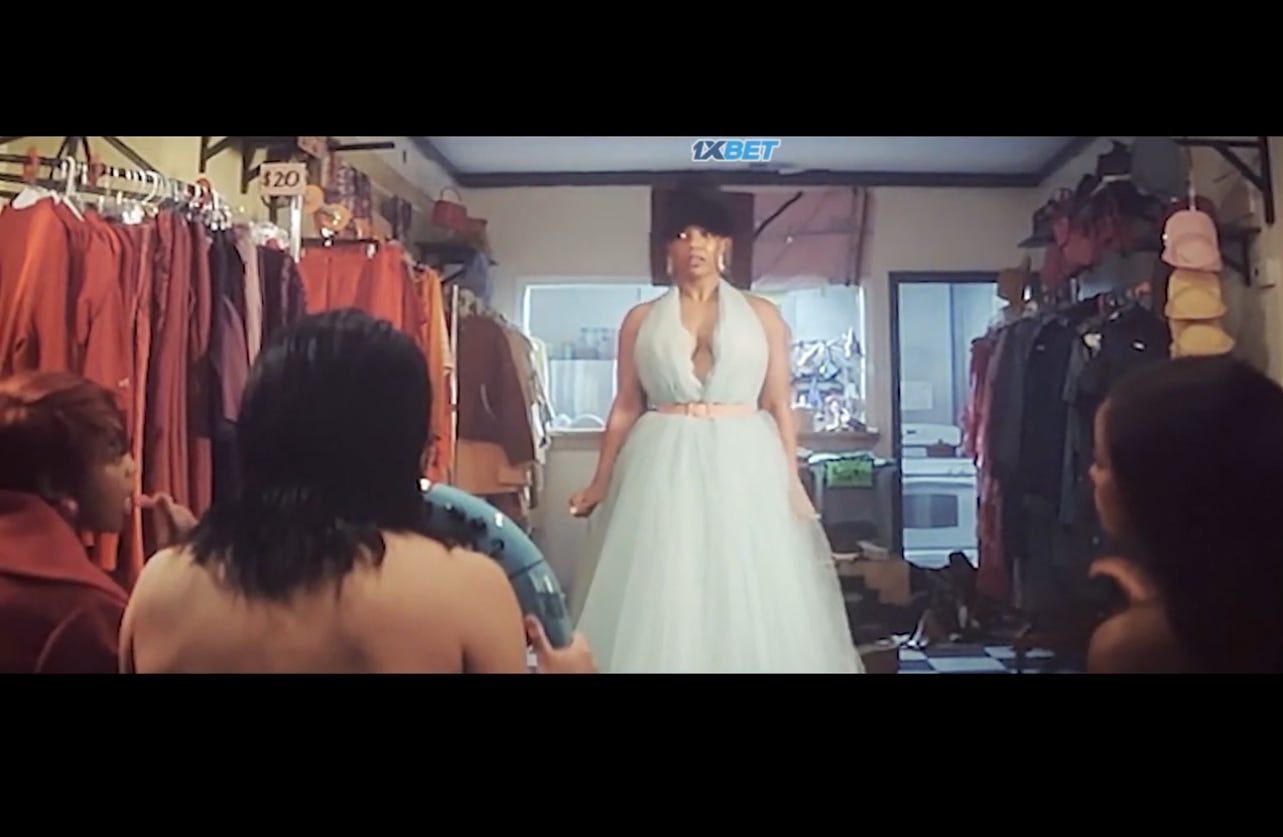
Another instance of dress transfigured into environmental ambience on Sade when this classic tulle halter…
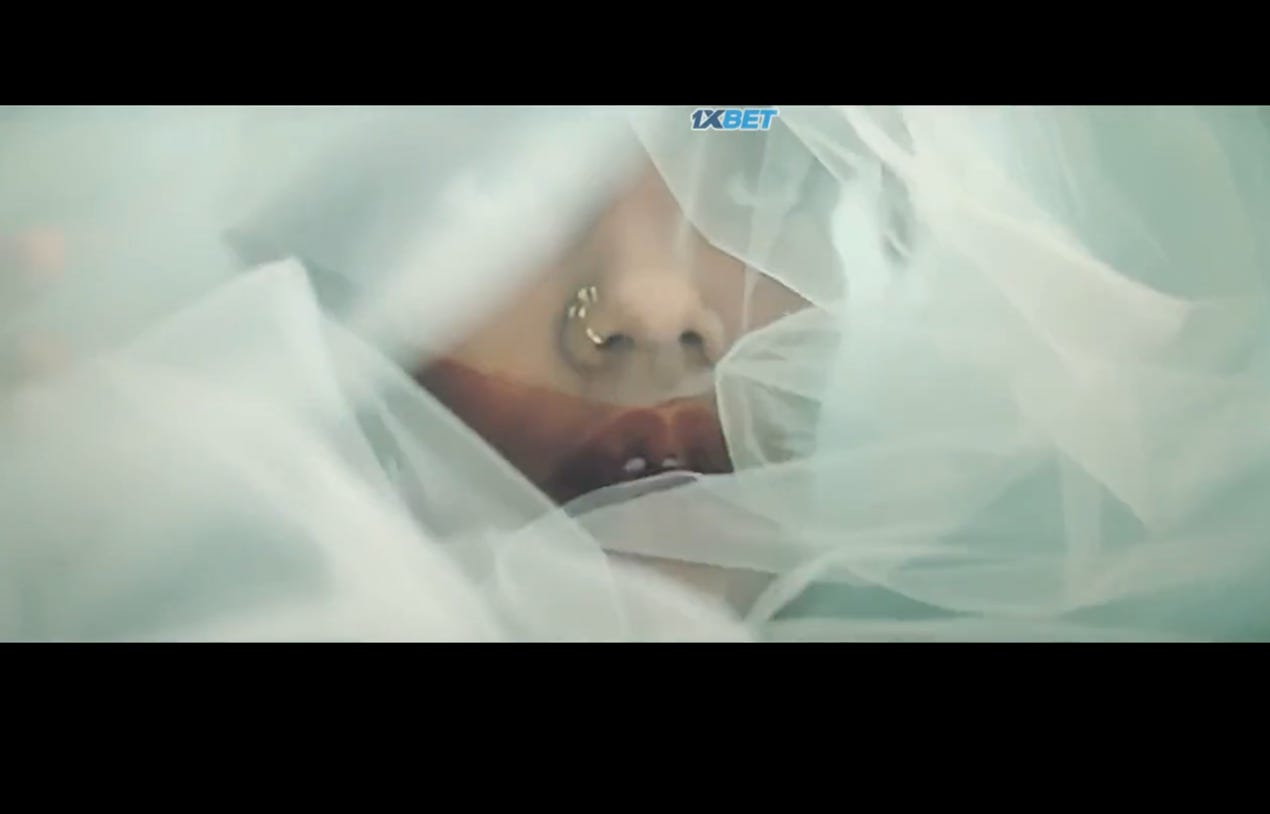
…burst into a cloud of the same fabric.
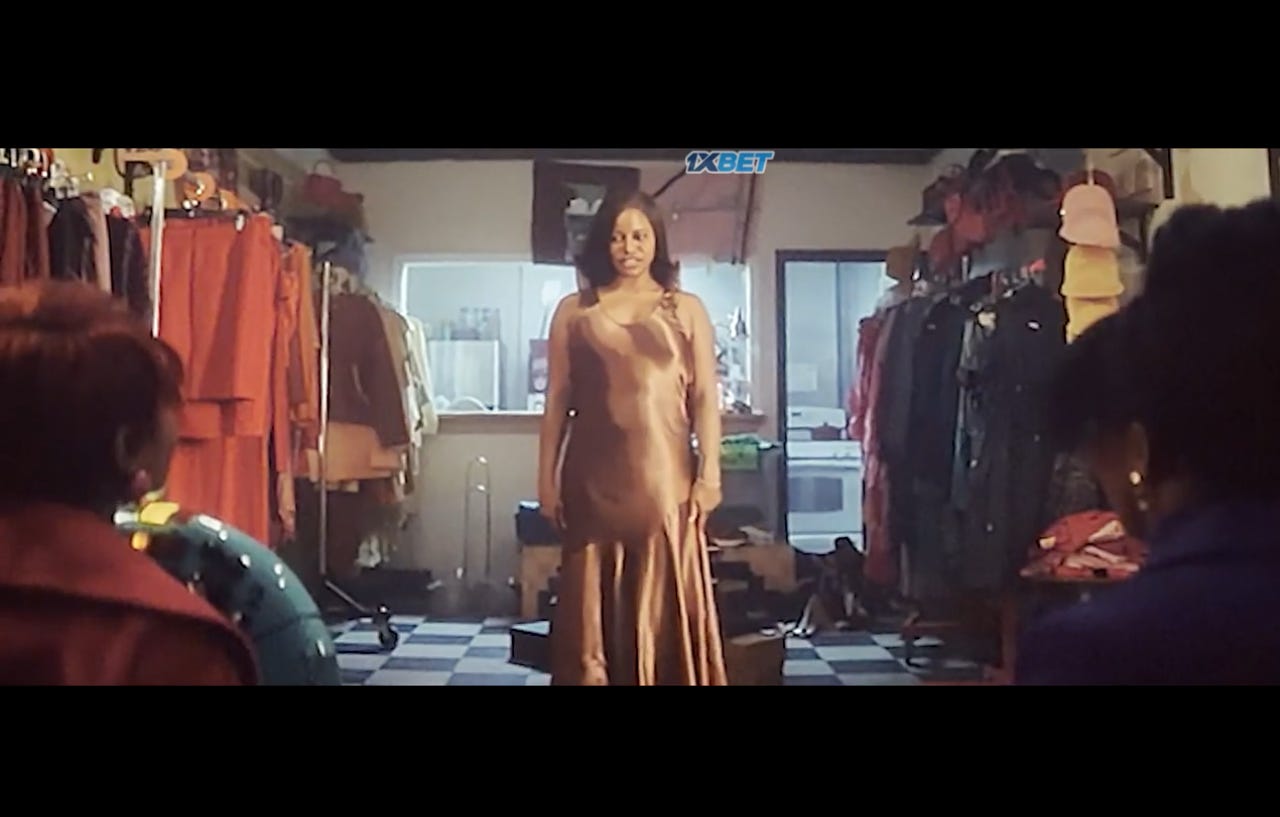
Mariah’s relatively simple look (you can’t really see them, but more pointy shoulders!)…
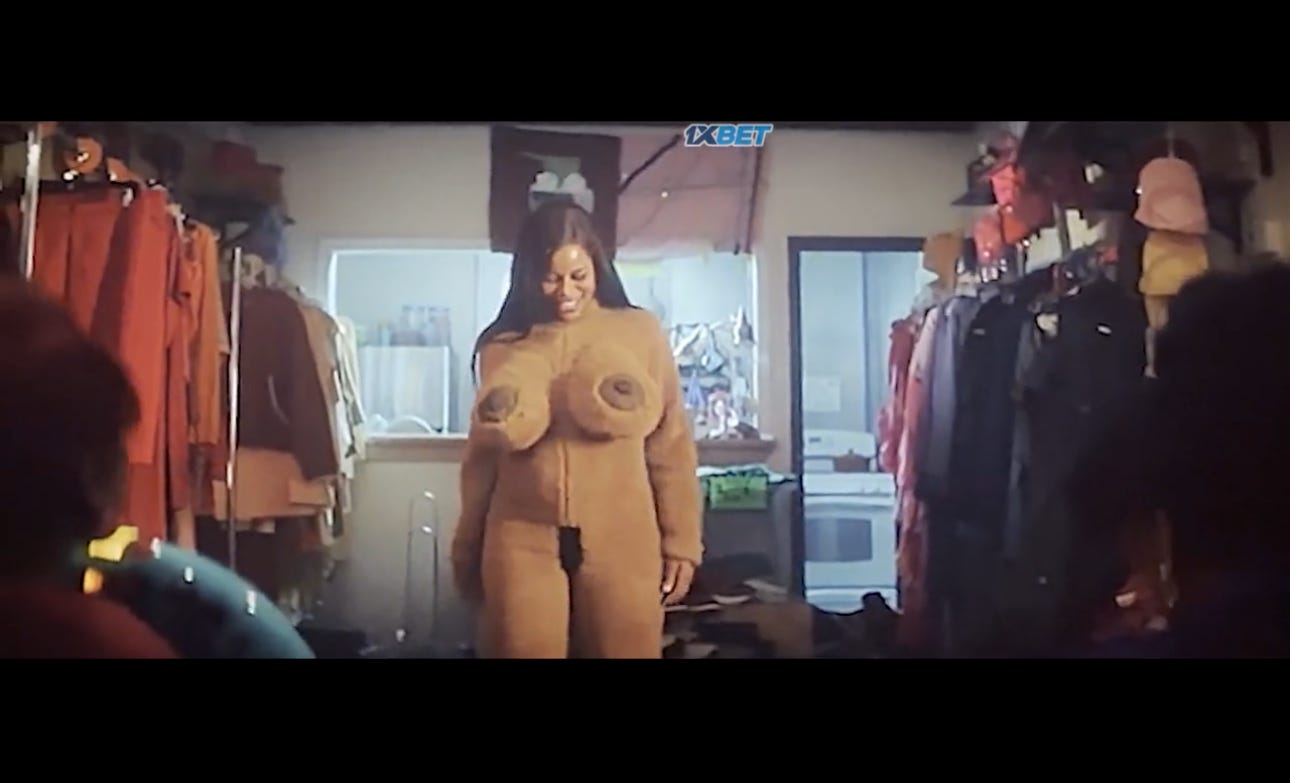
…transformed into the logical conclusion of the nude-on-the-red-carpet trend, emphasizing what most of such looks try to minimize: pendulous breasts and blatant pubes.
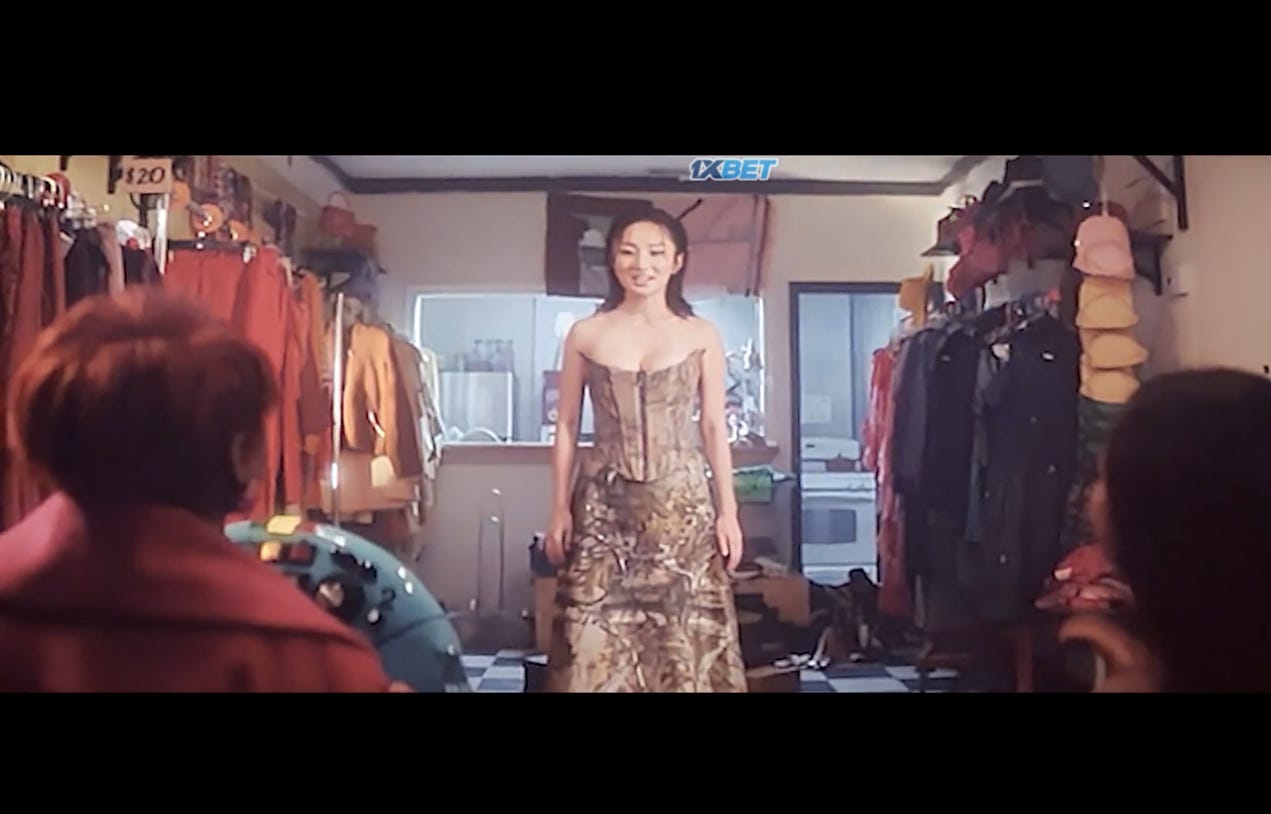
Finally, my favorite outfit in the entire movie, worn by Jianhu: what looks to be a Realtree (which I’ve been super into lately)-printed zip corset and maxi skirt, made perfect with slightly stringy (in a good way), slicked-back hair and no accessories. For some reason, I feel like anything else would weigh the look down…
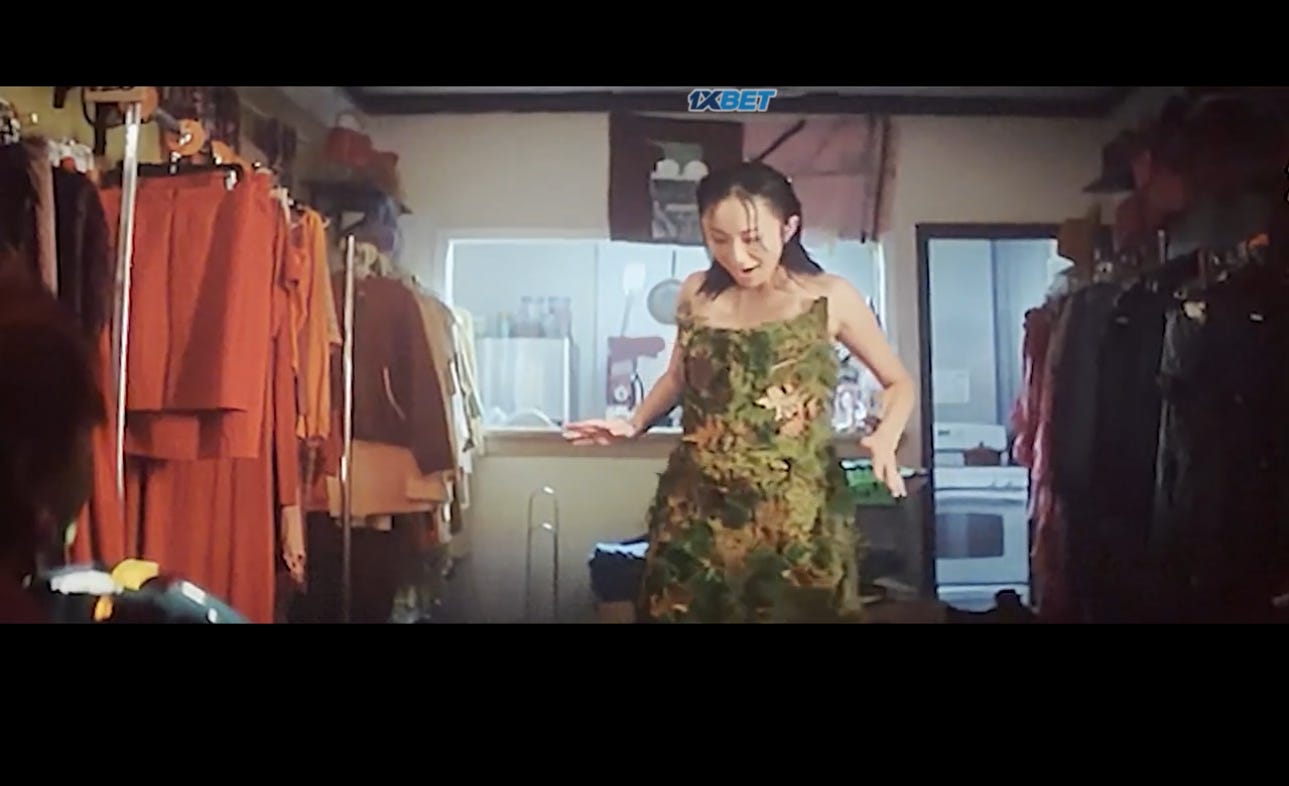
…and of course, it transforms into mossy, leafy tree bark, an under-exploited natural resource in the fashion industry, lol. Not that I’m encouraging stripping trees, but maybe taking a page from their book (or a leaf from their branch, I guess) fashion and structure-wise would be, well… fruitful.
Go see I Love Boosters and report back as to how you feel about it, especially its costuming!
<3 ESK
This looks amazing, worth it for the costumes alone! 💕🤘